Breeds Toy
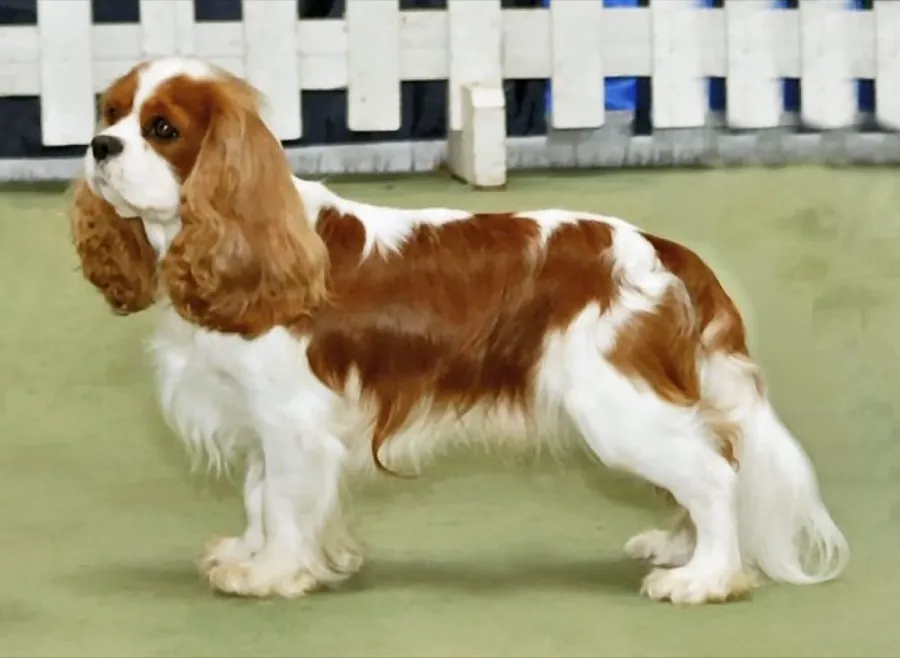
Cavalier King Charles Spaniel
Also known as Cavalier, CKCS
Toy spaniels were favorites of the English court in the 1600s, especially King Charles II. Over time those dogs were bred toward flatter faces, becoming the English Toy Spaniel. In the 1920s, breeders set out to recreate the longer-nosed spaniels seen in old paintings, producing the Cavalier. It is a sweet, people-loving companion that still retains some spaniel instinct.
At a glance
- Origin
- United Kingdom
- Developed
- 1920s
- Bred for
- Companionship, modeled on the toy spaniels of 17th-century royal courts
- Height
- 12–13 in
- Weight
- 13–18 lb
- Life span
- 12–15 years
- Size
- Small
- Coat
- Medium-length, silky coat with feathering; Blenheim, tricolor, black and tan, or ruby
- Grooming
- Moderate
- Shedding
- Moderate
- Exercise
- About an hour a day of walks and play; some enjoy sporting activities
- Recognized by
- American Kennel Club, United Kennel Club, Fédération Cynologique Internationale, Canadian Kennel Club, The Kennel Club (UK)
Good to know
Cavaliers thrive on companionship and may struggle when left alone for long periods, so build up alone-time gradually. Many still have a chase instinct, so a secure leash or fence is wise. Ask breeders about heart and neurological screening, and keep up regular veterinary heart checks.
Health considerations
- Mitral valve disease
- Syringomyelia
- Hip dysplasia
- Retinal dysplasia
Conditions breed clubs commonly screen for. Not every dog will have them. Ask your veterinarian about your own dog.
Did you know?
In 1926, American Roswell Eldridge offered prize money at Crufts for spaniels resembling those in King Charles II-era paintings, sparking the breed's revival.
Toy group
Small companion breeds, many developed for life alongside people. Small in size but often big in personality; they still need training, enrichment, and gentle handling.
Every Cavalier King Charles Spaniel is an individual.
Breed traits are tendencies, not guarantees. Your dog's genetics, early life, health, and everyday experiences all shape who they are. If you'd like help understanding the dog in front of you, let's talk.
Start a conversation