Breeds Foundation Stock Service
Hovawart
Also known as Hovie
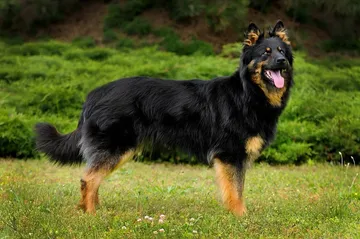
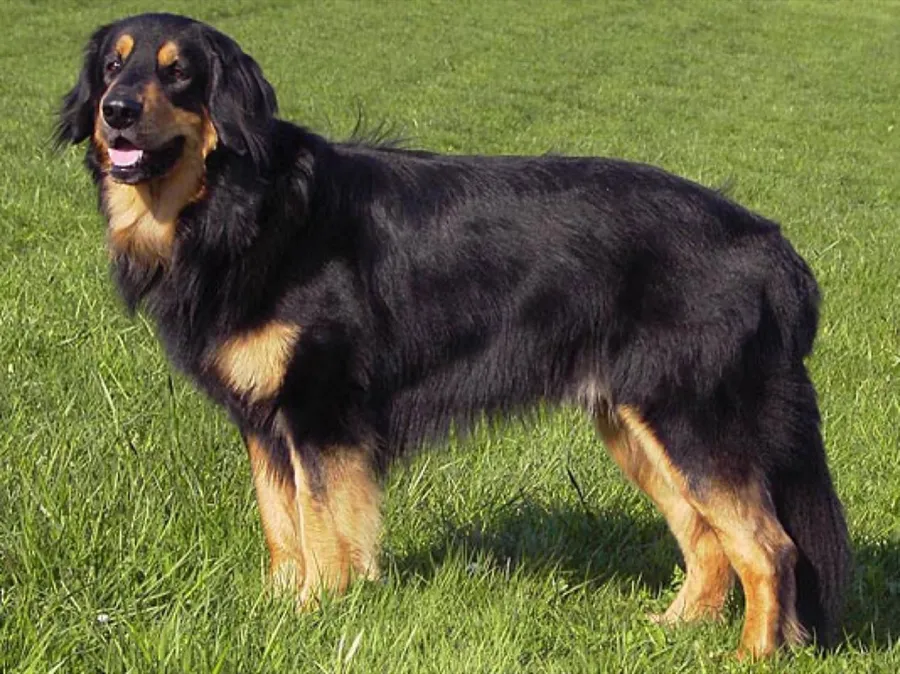
The Hovawart’s name comes from Middle High German words meaning estate guardian, and dogs of this type are mentioned in German records from the Middle Ages. Kurt F. König and others revived the breed in the early 1900s from farm dogs in the Black Forest and Harz regions. It is a devoted family dog that is watchful of its home.
At a glance
- Origin
- Germany
- Developed
- Medieval roots; revived in the early 1900s
- Bred for
- Guarding farms and estates
- Height
- 23–28 in
- Weight
- 55–90 lb
- Life span
- 10–14 years
- Size
- Large
- Coat
- Long, slightly wavy coat; black and gold, black, or blond
- Grooming
- Moderate
- Shedding
- Seasonal
- Exercise
- 1+ hour a day, plus training or tracking
- Recognized by
- United Kennel Club, Fédération Cynologique Internationale
Good to know
Hovawarts mature slowly and benefit from patient, consistent training and early socialization. They enjoy tracking, search, and other jobs that use their brains.
Health considerations
- Hip dysplasia
- Hypothyroidism
Conditions breed clubs commonly screen for. Not every dog will have them. Ask your veterinarian about your own dog.
Did you know?
The name “Hovawart” combines “hova” (estate or yard) and “wart” (guardian or watchman).
Foundation Stock Service group
An AKC record-keeping program for rare and developing breeds that are not yet fully recognized. Many are well established in their home countries.
Every Hovawart is an individual.
Breed traits are tendencies, not guarantees. Your dog's genetics, early life, health, and everyday experiences all shape who they are. If you'd like help understanding the dog in front of you, let's talk.
Start a conversation