Breeds Terrier
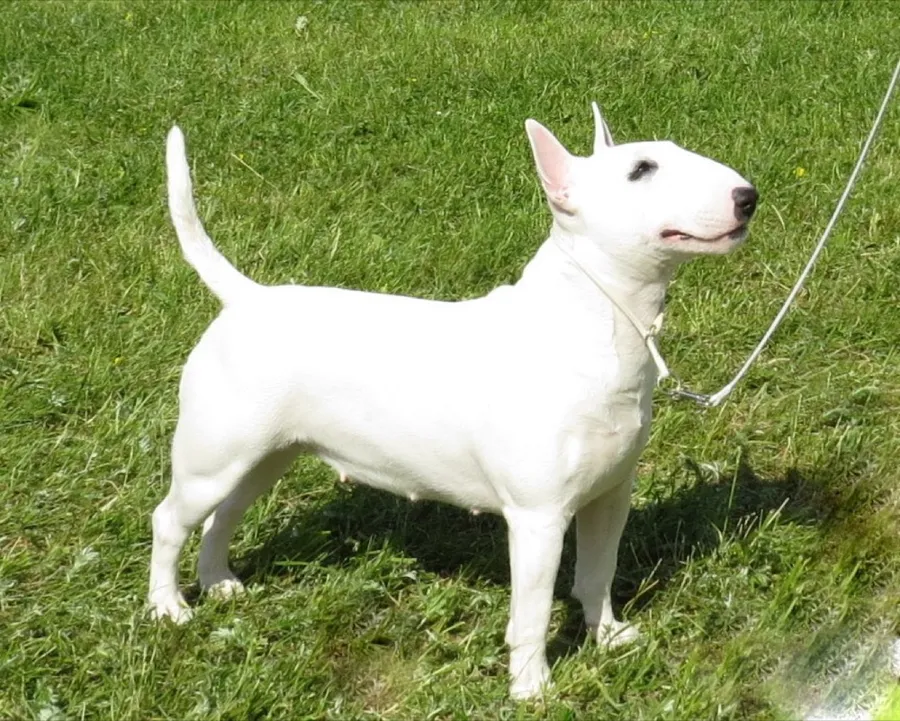
Miniature Bull Terrier
Also known as Mini Bull, Mini Bull Terrier
The Miniature Bull Terrier shares its early history with the Bull Terrier, and smaller dogs of the type were prized as ratters in 19th-century England. It was recognized as a separate breed in the 20th century and has the same egg-shaped head and lively personality in a compact size. Mini Bulls are fun-loving, people-focused companions.
At a glance
- Origin
- England
- Developed
- 1800s
- Bred for
- Ratting and companionship
- Height
- 10–14 in
- Weight
- 18–28 lb
- Life span
- 11–14 years
- Size
- Small
- Coat
- Short, flat, harsh coat with a fine gloss; white or colored
- Grooming
- Low
- Shedding
- Seasonal
- Exercise
- About an hour a day of walks and active play
- Recognized by
- American Kennel Club, United Kennel Club, Fédération Cynologique Internationale, Canadian Kennel Club, The Kennel Club (UK)
Good to know
Mini Bulls are energetic and can be determined, so consistent, upbeat training and daily play are key. Responsible breeders screen for lens luxation, deafness, and kidney and heart conditions.
Health considerations
- Primary lens luxation
- Deafness
- Hereditary nephritis
Conditions breed clubs commonly screen for. Not every dog will have them. Ask your veterinarian about your own dog.
Did you know?
Mini Bulls can be distinguished from Bull Terriers only by size; the breed standards are otherwise nearly identical.
Terrier group
Originally bred to hunt rodents and other vermin, often by digging. Typically energetic, determined, and full of personality, from small Cairns to the tall Airedale.
Every Miniature Bull Terrier is an individual.
Breed traits are tendencies, not guarantees. Your dog's genetics, early life, health, and everyday experiences all shape who they are. If you'd like help understanding the dog in front of you, let's talk.
Start a conversation