Breeds Terrier
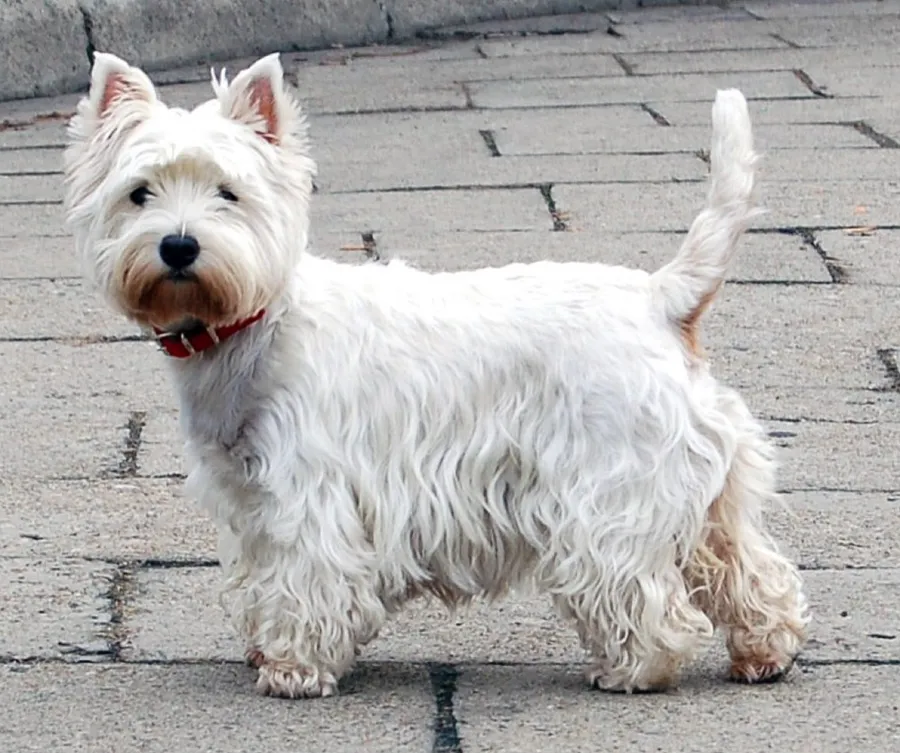
West Highland White Terrier
Also known as Westie, Poltalloch Terrier, Roseneath Terrier
The Westie was developed in the western Highlands of Scotland, most famously by Colonel Edward Malcolm of Poltalloch, who selected for white terriers that could not be mistaken for a fox in the field. It shares ancestry with the Cairn and Scottish Terriers. Westies are sociable, self-assured, and full of good cheer.
At a glance
- Origin
- Scotland
- Developed
- 1800s
- Bred for
- Hunting foxes, badgers, and vermin
- Height
- 10–11 in
- Weight
- 15–20 lb
- Life span
- 13–15 years
- Size
- Small
- Coat
- Hard, straight outer coat with a soft undercoat; pure white
- Grooming
- Moderate
- Shedding
- Minimal
- Exercise
- 30–60 minutes a day of walks and play
- Recognized by
- American Kennel Club, United Kennel Club, Fédération Cynologique Internationale, Canadian Kennel Club, The Kennel Club (UK)
Good to know
Westies are bright and energetic and enjoy digging and chasing, so supervised outdoor time is wise. Watch for itchy skin, which is common in the breed, and brush the coat weekly with periodic stripping or clipping.
Health considerations
- Atopic dermatitis
- Craniomandibular osteopathy
- Pulmonary fibrosis
- Legg-Calvé-Perthes disease
Conditions breed clubs commonly screen for. Not every dog will have them. Ask your veterinarian about your own dog.
Did you know?
According to breed lore, Colonel Malcolm began breeding white terriers after one of his reddish dogs was mistaken for a fox and accidentally shot.
Terrier group
Originally bred to hunt rodents and other vermin, often by digging. Typically energetic, determined, and full of personality, from small Cairns to the tall Airedale.
Every West Highland White Terrier is an individual.
Breed traits are tendencies, not guarantees. Your dog's genetics, early life, health, and everyday experiences all shape who they are. If you'd like help understanding the dog in front of you, let's talk.
Start a conversation