Breeds Miscellaneous
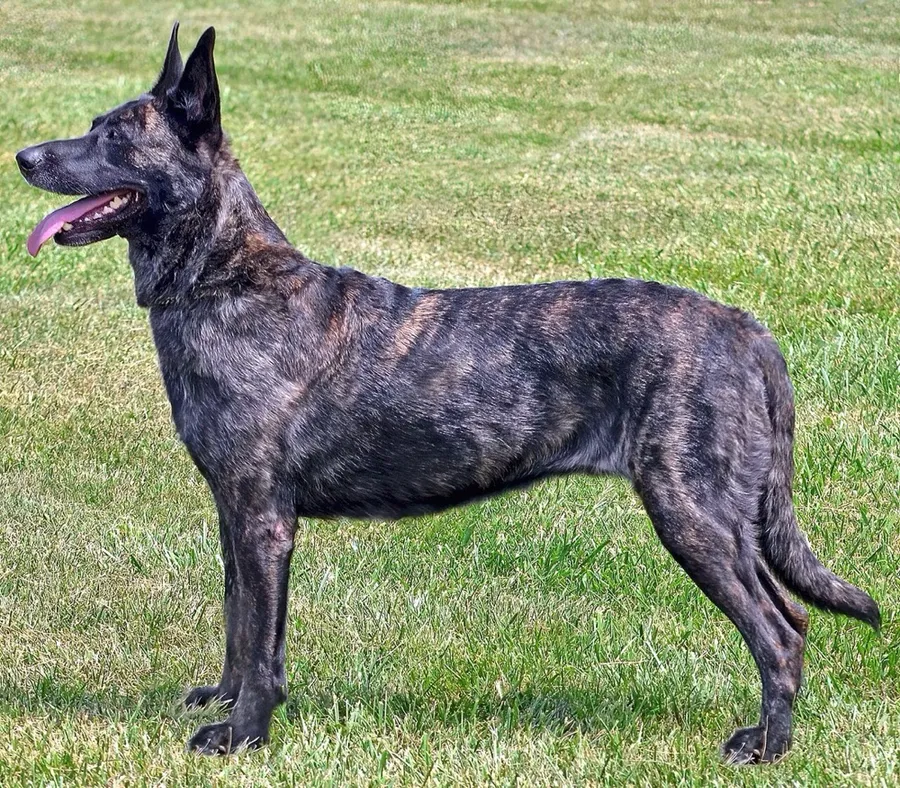
Dutch Shepherd
Also known as Hollandse Herder, Dutch Herder
Dutch Shepherds were all-purpose farm dogs in the Netherlands, herding sheep, watching the farmyard, and keeping hens out of the garden. As farming changed, their versatility led them into police work, search and rescue, and guide work. They are athletic, independent-minded dogs that thrive with a job to do. AKC has approved the breed for full recognition in the Herding Group effective June 30, 2027.
At a glance
- Origin
- Netherlands
- Developed
- Early 1800s
- Bred for
- Herding and general farm work; later police and service work
- Height
- 21.5–24.5 in
- Weight
- 42–75 lb
- Life span
- 11–14 years
- Size
- Large
- Coat
- Short-haired, long-haired, or rough-haired varieties; gold or silver brindle
- Grooming
- Low
- Shedding
- Seasonal
- Exercise
- 1–2+ hours a day, plus training and mental work
- Recognized by
- American Kennel Club, United Kennel Club, Fédération Cynologique Internationale
Good to know
Dutch Shepherds need daily physical and mental exercise and consistent, fair training. Without enough outlets, their drive can turn into restlessness.
Health considerations
- Hip dysplasia
- Elbow dysplasia
- Goniodysgenesis (rough-haired)
Conditions breed clubs commonly screen for. Not every dog will have them. Ask your veterinarian about your own dog.
Did you know?
The breed is always brindle, a trait that helped distinguish it from its close Belgian Shepherd cousins.
Miscellaneous group
Breeds working toward full AKC recognition. They can compete in some AKC events while their breed clubs complete the requirements.
Every Dutch Shepherd is an individual.
Breed traits are tendencies, not guarantees. Your dog's genetics, early life, health, and everyday experiences all shape who they are. If you'd like help understanding the dog in front of you, let's talk.
Start a conversation