Breeds Sporting
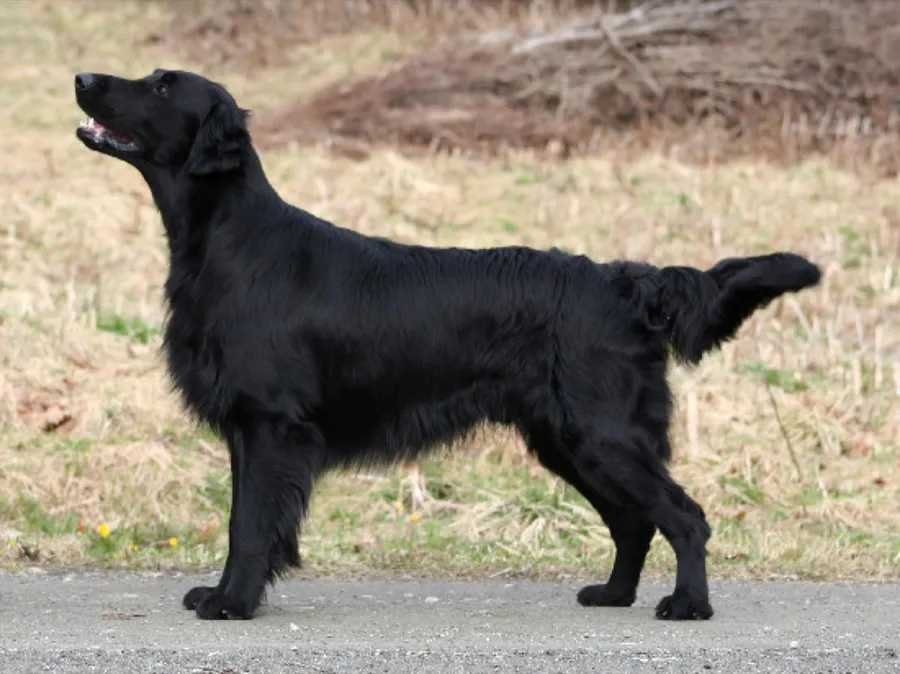
Flat-Coated Retriever
Also known as Flat-Coat, Flattie
The Flat-Coated Retriever was developed in England in the mid-1800s and became a favorite gamekeeper's dog on British estates. It declined in popularity as the Labrador and Golden Retriever rose, but enthusiasts preserved it. Flat-Coats are known for their exuberant, upbeat personality and wagging tails.
At a glance
- Origin
- England
- Developed
- Mid-1800s
- Bred for
- Retrieving game on land and in water
- Height
- 22–24.5 in
- Weight
- 60–70 lb
- Life span
- 8–10 years
- Size
- Large
- Coat
- Thick, flat, glossy coat of moderate length with feathering; solid black or liver
- Grooming
- Moderate
- Shedding
- Moderate
- Exercise
- 1–2 hours a day of exercise and play
- Recognized by
- American Kennel Club, United Kennel Club, Fédération Cynologique Internationale, Canadian Kennel Club, The Kennel Club (UK)
Good to know
Flat-Coats stay playful and puppyish for years, so they need consistent training and lots of exercise. Owners should be aware the breed has a higher-than-average cancer rate and stay current with veterinary checkups.
Health considerations
- Cancer (histiocytic sarcoma, hemangiosarcoma)
- Hip dysplasia
- Patellar luxation
- Glaucoma
Conditions breed clubs commonly screen for. Not every dog will have them. Ask your veterinarian about your own dog.
Did you know?
Flat-Coats are often called the 'Peter Pan' of retrievers because they keep their youthful, playful attitude well into adulthood.
Sporting group
Retrievers, pointers, setters, and spaniels, developed to help hunters find and retrieve game. Typically active, people-focused, and happiest with regular exercise and a job to do.
Every Flat-Coated Retriever is an individual.
Breed traits are tendencies, not guarantees. Your dog's genetics, early life, health, and everyday experiences all shape who they are. If you'd like help understanding the dog in front of you, let's talk.
Start a conversation