Breeds Herding
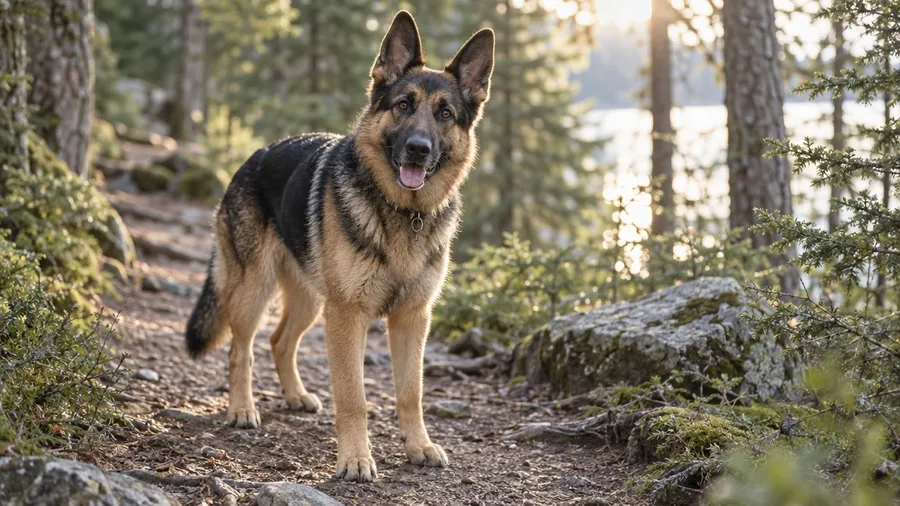
German Shepherd Dog
Also known as German Shepherd, GSD, Alsatian, Deutscher Schäferhund
The German Shepherd Dog was developed by Captain Max von Stephanitz, who in 1899 registered a dog named Horand von Grafrath as the first of the breed and founded the breed club. His goal was a highly capable, versatile working dog. German Shepherds became celebrated police, military, guide, and search-and-rescue dogs, and they consistently rank among the most popular breeds in the United States.
At a glance
- Origin
- Germany
- Developed
- 1899
- Bred for
- Herding and guarding sheep; later police, military, service, and search-and-rescue work
- Height
- 22–26 in
- Weight
- 50–90 lb
- Life span
- 7–10 years
- Size
- Large
- Coat
- Medium-length, dense double coat (long-coated dogs also occur); most often black and tan or sable, also solid black
- Grooming
- Moderate
- Shedding
- Heavy
- Exercise
- 1–2 hours a day of exercise plus training and mental work
- Recognized by
- American Kennel Club, United Kennel Club, Fédération Cynologique Internationale, Canadian Kennel Club, The Kennel Club (UK)
Good to know
German Shepherds need daily exercise and training, and they thrive when they have a job. Their natural watchfulness makes early, ongoing socialization important. Choose breeders who screen hips and elbows, and expect heavy shedding year-round with bigger seasonal sheds.
Health considerations
- Hip dysplasia
- Elbow dysplasia
- Degenerative myelopathy
- Gastric dilatation-volvulus (bloat)
Conditions breed clubs commonly screen for. Not every dog will have them. Ask your veterinarian about your own dog.
Did you know?
The first guide dog for the blind in the United States was a German Shepherd named Buddy, who guided Morris Frank starting in 1928.
Herding group
Dogs developed to gather, drive, and protect livestock. Usually intelligent, responsive, and energetic, with a strong instinct to control movement.
Every German Shepherd Dog is an individual.
Breed traits are tendencies, not guarantees. Your dog's genetics, early life, health, and everyday experiences all shape who they are. If you'd like help understanding the dog in front of you, let's talk.
Start a conversation