Breeds Working
Boxer
Also known as German Boxer, Deutscher Boxer
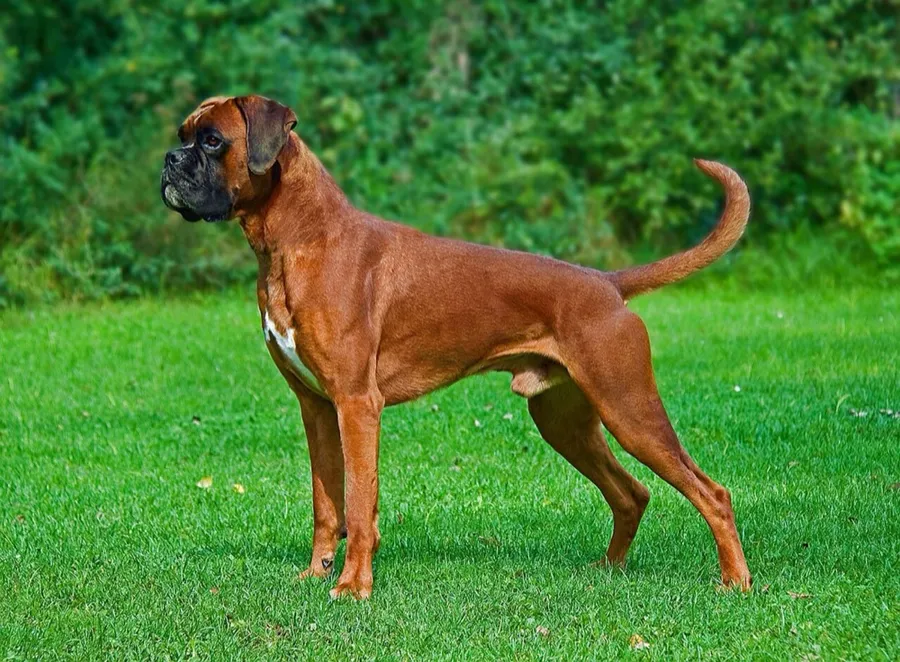
The Boxer was developed in Germany in the late 1800s from the Bullenbeisser, a mastiff-type hunting dog, crossed with English bulldog types. The breed served as a messenger and guard dog in World War I and became one of the most popular family dogs in the United States. Boxers are exuberant, clownish, and deeply attached to their people.
At a glance
- Origin
- Germany
- Developed
- Late 1800s
- Bred for
- Holding large game for hunters; later guard, police, and companion work
- Height
- 21.5–25 in
- Weight
- 50–80 lb
- Life span
- 10–12 years
- Size
- Large
- Coat
- Short, shiny, tight coat; fawn or brindle, often with white markings and a black mask
- Grooming
- Low
- Shedding
- Moderate
- Exercise
- 1 hour or more a day of active play, walks, and training
- Recognized by
- American Kennel Club, United Kennel Club, Fédération Cynologique Internationale, Canadian Kennel Club, The Kennel Club (UK)
Good to know
Boxers stay puppyish for years and need daily exercise and impulse-control training, especially around jumping up. Their short muzzle makes them sensitive to heat. Ask breeders about heart screening.
Health considerations
- Boxer cardiomyopathy (ARVC)
- Aortic and subaortic stenosis
- Cancers, including mast cell tumors
- Hip dysplasia
Conditions breed clubs commonly screen for. Not every dog will have them. Ask your veterinarian about your own dog.
Did you know?
The Boxer's main ancestor, the Bullenbeisser, translates to 'bull biter' in German.
Working group
Guardians, sled dogs, draft dogs, and rescue dogs. Often large and strong, intelligent, and capable of serious work. Early socialization and consistent training matter.
Every Boxer is an individual.
Breed traits are tendencies, not guarantees. Your dog's genetics, early life, health, and everyday experiences all shape who they are. If you'd like help understanding the dog in front of you, let's talk.
Start a conversation