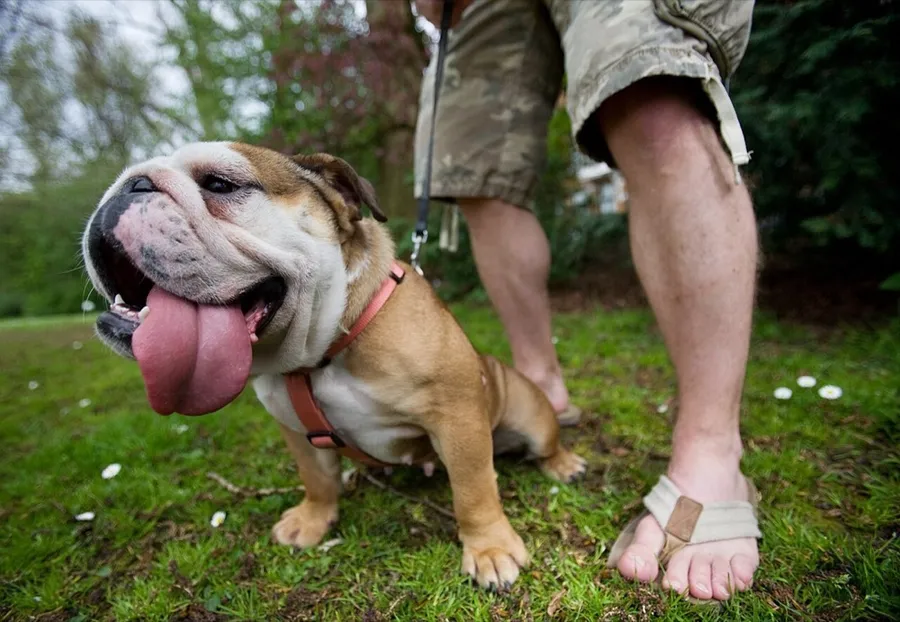
Breeds Non-Sporting
Bulldog
Also known as English Bulldog, British Bulldog
The Bulldog was originally bred in England for bull-baiting, a cruel sport banned in 1835. After the ban, fanciers bred the dog for a gentler temperament and companionship. The Bulldog became a symbol of British determination. Today it is known as a calm, affectionate, and steady family companion.
At a glance
- Origin
- England
- Developed
- 1200s–1800s; modern companion type from the mid-1800s
- Bred for
- Originally bull-baiting; after the practice was banned in 1835, developed as a companion
- Height
- 14–15 in
- Weight
- 40–50 lb
- Life span
- 8–10 years
- Size
- Medium
- Coat
- Short, smooth, fine coat; brindle, white, red, fawn, or piebald
- Grooming
- Low
- Shedding
- Moderate
- Exercise
- About 20–30 minutes a day of easy walks, avoiding heat
- Recognized by
- American Kennel Club, United Kennel Club, Fédération Cynologique Internationale, Canadian Kennel Club, The Kennel Club (UK)
Good to know
Bulldogs are very sensitive to heat and should never be exercised hard in warm weather. Keep their facial wrinkles clean and dry, and monitor their weight. Ask breeders about breathing, hip, and heart screening.
Health considerations
- Brachycephalic airway syndrome
- Hip dysplasia
- Skin fold dermatitis
- Cherry eye
Conditions breed clubs commonly screen for. Not every dog will have them. Ask your veterinarian about your own dog.
Did you know?
Yale University's Bulldog mascot, Handsome Dan, first appeared in 1889 and is one of the earliest live college mascots.
Non-Sporting group
A varied group of breeds with different histories, from the Dalmatian and Chow Chow to the Bulldog and Poodle. Size, coat, and energy vary widely.
Every Bulldog is an individual.
Breed traits are tendencies, not guarantees. Your dog's genetics, early life, health, and everyday experiences all shape who they are. If you'd like help understanding the dog in front of you, let's talk.
Start a conversation