Breeds Toy
Chinese Crested
Also known as Crested, Powderpuff
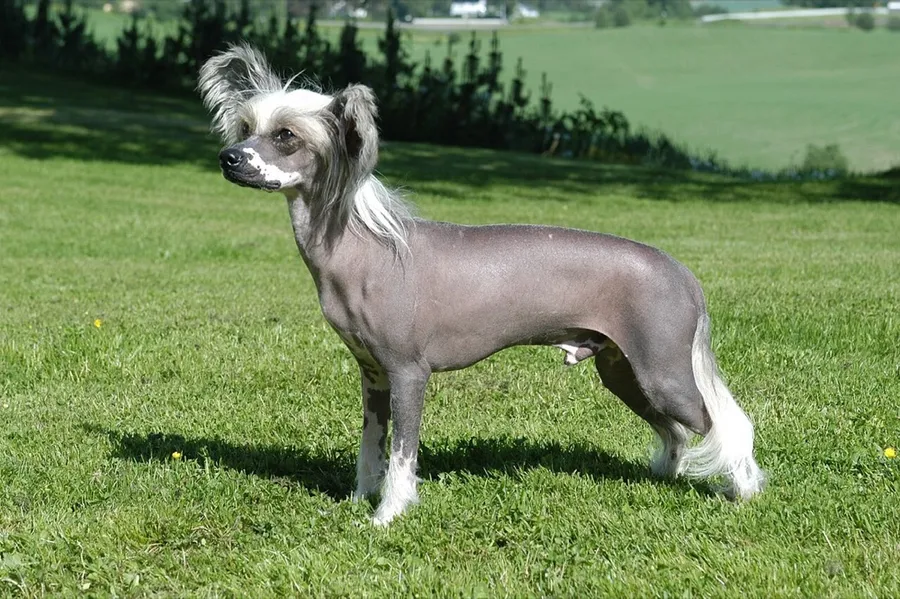
The Chinese Crested's exact history is debated, but tradition holds that small hairless dogs traveled aboard Chinese trading ships. The breed was developed largely in Europe and North America in the 20th century and was fully recognized by the AKC in 1991. It comes in two varieties, Hairless and Powderpuff, which can appear in the same litter. Cresteds are devoted, cheerful companions.
At a glance
- Origin
- China (by tradition); developed further in Europe and North America
- Developed
- Ancient origins; modern breed developed in the 1900s
- Bred for
- Companionship; historically said to be a ratter aboard ships
- Height
- 11–13 in
- Weight
- 8–12 lb
- Life span
- 13–18 years
- Size
- Toy
- Coat
- Hairless variety has soft skin with silky hair on the head, tail, and feet; Powderpuff variety has a full, soft double coat; any color
- Grooming
- Moderate
- Shedding
- Minimal
- Exercise
- About 30 minutes a day of walks and play
- Recognized by
- American Kennel Club, United Kennel Club, Fédération Cynologique Internationale, Canadian Kennel Club, The Kennel Club (UK)
Good to know
Hairless Cresteds need sun protection, skin care, and warmth in cold weather, while Powderpuffs need regular brushing. They are sensitive and do best with calm, patient training. Dental care deserves special attention, especially in the Hairless variety.
Health considerations
- Dental disease
- Primary lens luxation
- Progressive retinal atrophy
- Patellar luxation
Conditions breed clubs commonly screen for. Not every dog will have them. Ask your veterinarian about your own dog.
Did you know?
Burlesque performer Gypsy Rose Lee was an early American fancier of the Chinese Crested.
Toy group
Small companion breeds, many developed for life alongside people. Small in size but often big in personality; they still need training, enrichment, and gentle handling.
Every Chinese Crested is an individual.
Breed traits are tendencies, not guarantees. Your dog's genetics, early life, health, and everyday experiences all shape who they are. If you'd like help understanding the dog in front of you, let's talk.
Start a conversation