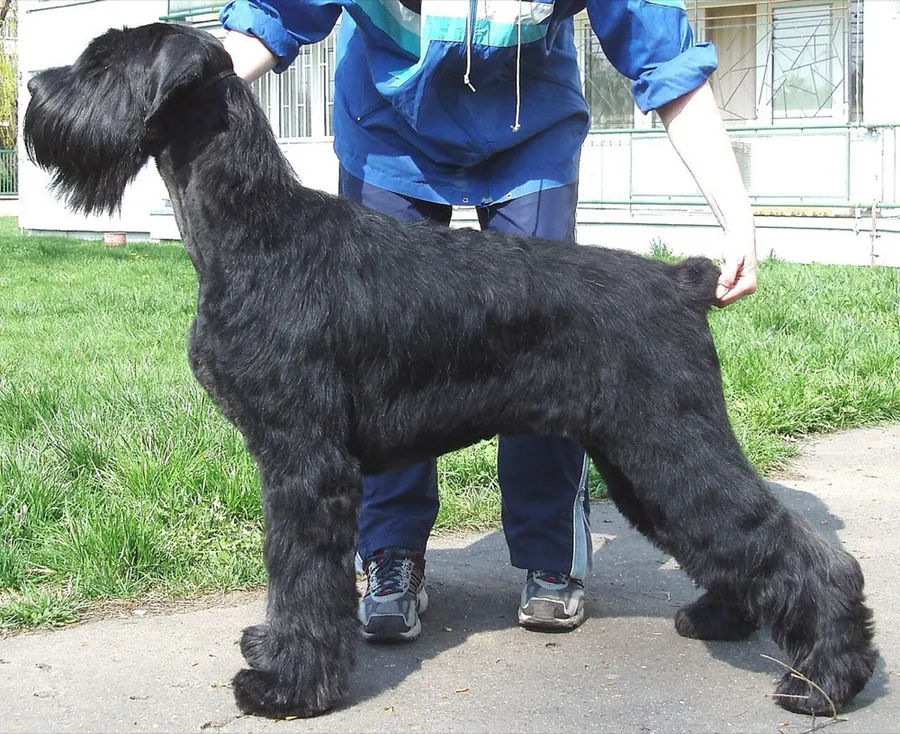
Breeds Working
Giant Schnauzer
Also known as Riesenschnauzer, Munich Schnauzer
The Giant Schnauzer was developed in Bavaria, likely from the Standard Schnauzer crossed with larger breeds, to drive cattle to market and guard farms. As cattle droving declined, Giants found new work guarding breweries and butcher shops and later serving as police dogs. They are bold, devoted, and highly trainable dogs with lots of energy.
At a glance
- Origin
- Germany
- Developed
- Mid-1800s
- Bred for
- Driving cattle and guarding farms, breweries, and stockyards; later police work
- Height
- 23.5–27.5 in
- Weight
- 55–85 lb
- Life span
- 12–15 years
- Size
- Large
- Coat
- Harsh, wiry, dense double coat with beard and eyebrows; solid black or salt and pepper
- Grooming
- High
- Shedding
- Minimal
- Exercise
- 1–2+ hours a day of vigorous exercise plus training
- Recognized by
- American Kennel Club, United Kennel Club, Fédération Cynologique Internationale, Canadian Kennel Club, The Kennel Club (UK)
Good to know
Giant Schnauzers need serious daily exercise and a job, such as obedience, tracking, or dog sports. The coat requires regular brushing and hand-stripping or clipping. Early socialization supports their naturally watchful nature.
Health considerations
- Hip dysplasia
- Hypothyroidism
- Progressive retinal atrophy
- Toe (digital) squamous cell carcinoma
Conditions breed clubs commonly screen for. Not every dog will have them. Ask your veterinarian about your own dog.
Did you know?
In Germany the Giant Schnauzer was once called the 'Münchener' because of its strong association with Munich.
Working group
Guardians, sled dogs, draft dogs, and rescue dogs. Often large and strong, intelligent, and capable of serious work. Early socialization and consistent training matter.
Every Giant Schnauzer is an individual.
Breed traits are tendencies, not guarantees. Your dog's genetics, early life, health, and everyday experiences all shape who they are. If you'd like help understanding the dog in front of you, let's talk.
Start a conversation