Breeds Herding
Lancashire Heeler
Also known as Ormskirk Heeler, Ormskirk Terrier
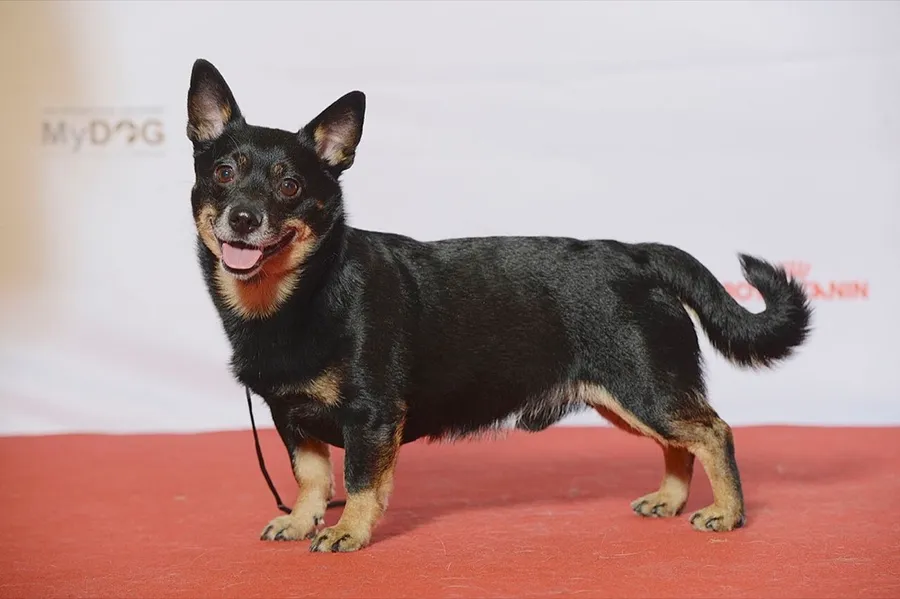
The Lancashire Heeler comes from the Ormskirk area of northwest England, where it drove cattle and doubled as a farm ratter. It is thought to descend from crosses of Welsh Corgis and Manchester Terriers. Heelers are small, sturdy, and spirited, combining herding instinct with terrier-like enthusiasm.
At a glance
- Origin
- England
- Developed
- Possibly 1600s; breed club formed 1978
- Bred for
- Driving cattle to market and catching rats on farms
- Height
- 10–12 in
- Weight
- 9–17 lb
- Life span
- 12–15 years
- Size
- Small
- Coat
- Short, dense, flat, weather-resistant coat; black and tan or liver and tan
- Grooming
- Low
- Shedding
- Seasonal
- Exercise
- About 1 hour a day of walks and play
- Recognized by
- American Kennel Club, United Kennel Club, Fédération Cynologique Internationale, Canadian Kennel Club, The Kennel Club (UK)
Good to know
Heelers are energetic and clever and enjoy training and dog sports. They may chase small animals and nip at heels, so recall work and redirection are useful, and screening for eye conditions is recommended.
Health considerations
- Primary lens luxation
- Collie eye anomaly
- Patellar luxation
Conditions breed clubs commonly screen for. Not every dog will have them. Ask your veterinarian about your own dog.
Did you know?
Lancashire Heelers are known for a happy expression owners call the Heeler smile, in which the dog pulls its lips back in a grin.
Herding group
Dogs developed to gather, drive, and protect livestock. Usually intelligent, responsive, and energetic, with a strong instinct to control movement.
Every Lancashire Heeler is an individual.
Breed traits are tendencies, not guarantees. Your dog's genetics, early life, health, and everyday experiences all shape who they are. If you'd like help understanding the dog in front of you, let's talk.
Start a conversation