Breeds Sporting
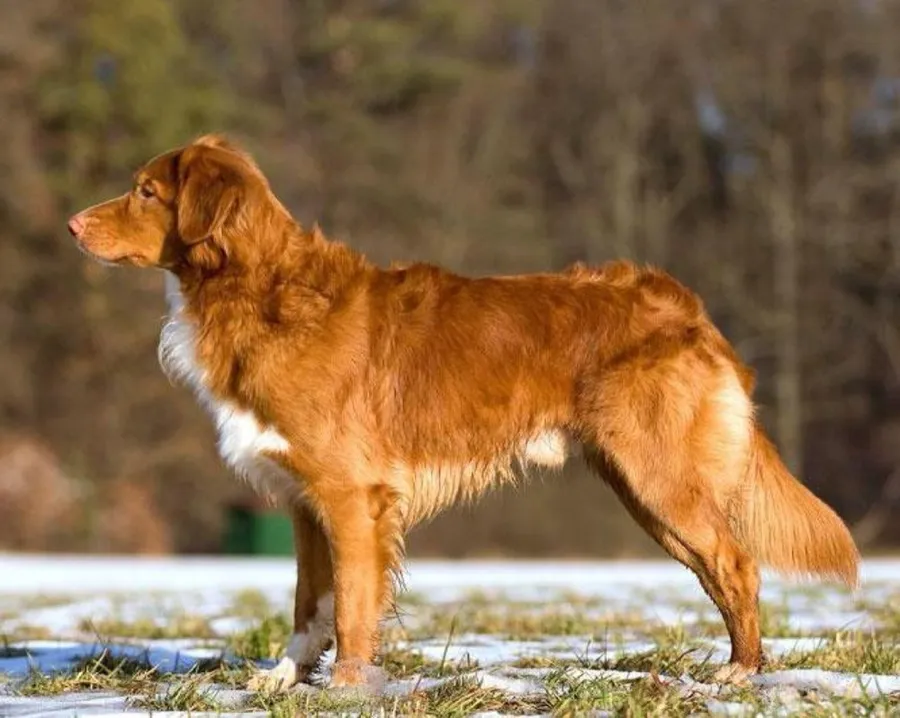
Nova Scotia Duck Tolling Retriever
Also known as Toller, Little River Duck Dog
The Nova Scotia Duck Tolling Retriever was developed in Yarmouth County, Nova Scotia, to 'toll' ducks: it romps along the shoreline, attracting curious waterfowl within range of hunters, then retrieves the birds. It is the smallest of the AKC retrievers. Tollers are bright, active, and affectionate with family, and can be reserved with strangers.
At a glance
- Origin
- Canada (Nova Scotia)
- Developed
- 1800s
- Bred for
- Tolling (luring) ducks within gun range with playful activity, then retrieving them
- Height
- 17–21 in
- Weight
- 35–50 lb
- Life span
- 12–14 years
- Size
- Medium
- Coat
- Medium-length, water-repellent double coat; shades of red or orange, often with white markings
- Grooming
- Moderate
- Shedding
- Seasonal
- Exercise
- 1–2 hours a day of vigorous exercise and retrieving
- Recognized by
- American Kennel Club, United Kennel Club, Fédération Cynologique Internationale, Canadian Kennel Club, The Kennel Club (UK)
Good to know
Tollers need lots of exercise and mental stimulation, and they are known for a high-pitched 'Toller scream' when excited. Consistent, clear, consistent training and early socialization help channel their energy.
Health considerations
- Hip dysplasia
- Progressive retinal atrophy
- Autoimmune disorders
- Collie eye anomaly
Conditions breed clubs commonly screen for. Not every dog will have them. Ask your veterinarian about your own dog.
Did you know?
The Nova Scotia Duck Tolling Retriever is the official provincial dog of Nova Scotia.
Sporting group
Retrievers, pointers, setters, and spaniels, developed to help hunters find and retrieve game. Typically active, people-focused, and happiest with regular exercise and a job to do.
Every Nova Scotia Duck Tolling Retriever is an individual.
Breed traits are tendencies, not guarantees. Your dog's genetics, early life, health, and everyday experiences all shape who they are. If you'd like help understanding the dog in front of you, let's talk.
Start a conversation