Breeds Working
Portuguese Water Dog
Also known as Cão de Água Português, PWD, Portie
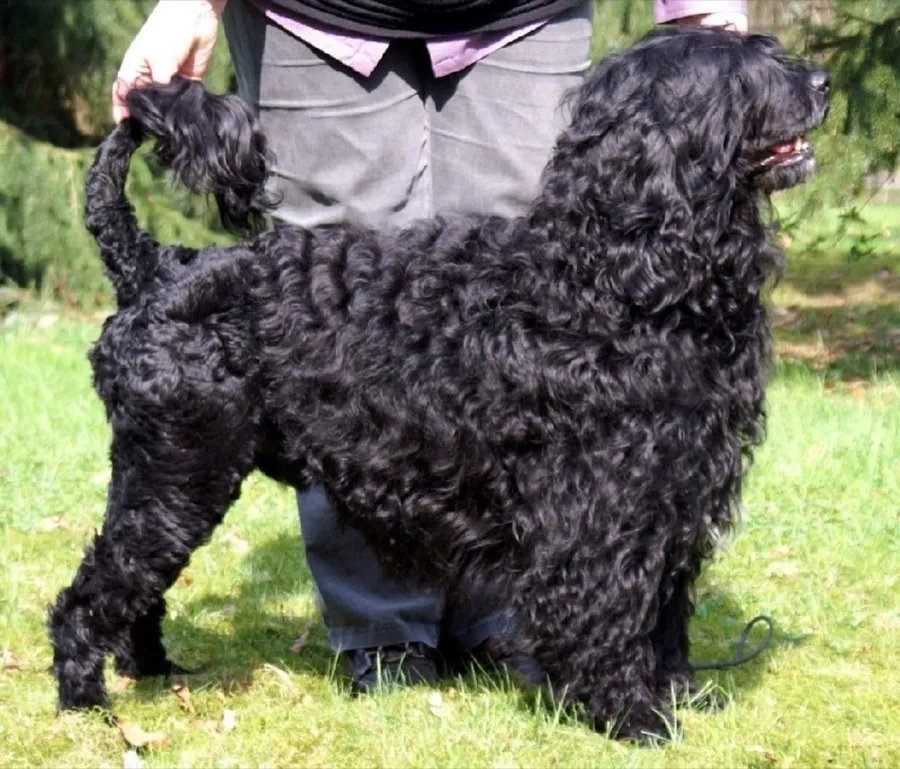
The Portuguese Water Dog worked with fishermen along the Algarve coast, herding fish into nets, retrieving lost tackle, and swimming messages between boats. As fishing modernized the breed nearly vanished, until Portuguese shipping magnate Vasco Bensaude revived it in the 1930s. PWDs are athletic, clever, and closely bonded to their families.
At a glance
- Origin
- Portugal
- Developed
- Centuries old; revived in the 1930s
- Bred for
- Herding fish into nets, retrieving gear, and carrying messages between boats
- Height
- 17–23 in
- Weight
- 35–60 lb
- Life span
- 11–13 years
- Size
- Medium
- Coat
- Single coat, either tight curly or wavy; black, brown, or white, or black or brown with white
- Grooming
- High
- Shedding
- Minimal
- Exercise
- 1 hour or more a day; loves swimming and retrieving
- Recognized by
- American Kennel Club, United Kennel Club, Fédération Cynologique Internationale, Canadian Kennel Club, The Kennel Club (UK)
Good to know
PWDs need daily exercise and mental work, and many thrive in water sports, agility, or obedience. The coat needs regular brushing and professional clipping every 1–2 months.
Health considerations
- Hip dysplasia
- Progressive retinal atrophy
- Addison's disease
- GM1 storage disease
Conditions breed clubs commonly screen for. Not every dog will have them. Ask your veterinarian about your own dog.
Did you know?
Bo and Sunny, two Portuguese Water Dogs, lived in the White House with the Obama family.
Working group
Guardians, sled dogs, draft dogs, and rescue dogs. Often large and strong, intelligent, and capable of serious work. Early socialization and consistent training matter.
Every Portuguese Water Dog is an individual.
Breed traits are tendencies, not guarantees. Your dog's genetics, early life, health, and everyday experiences all shape who they are. If you'd like help understanding the dog in front of you, let's talk.
Start a conversation