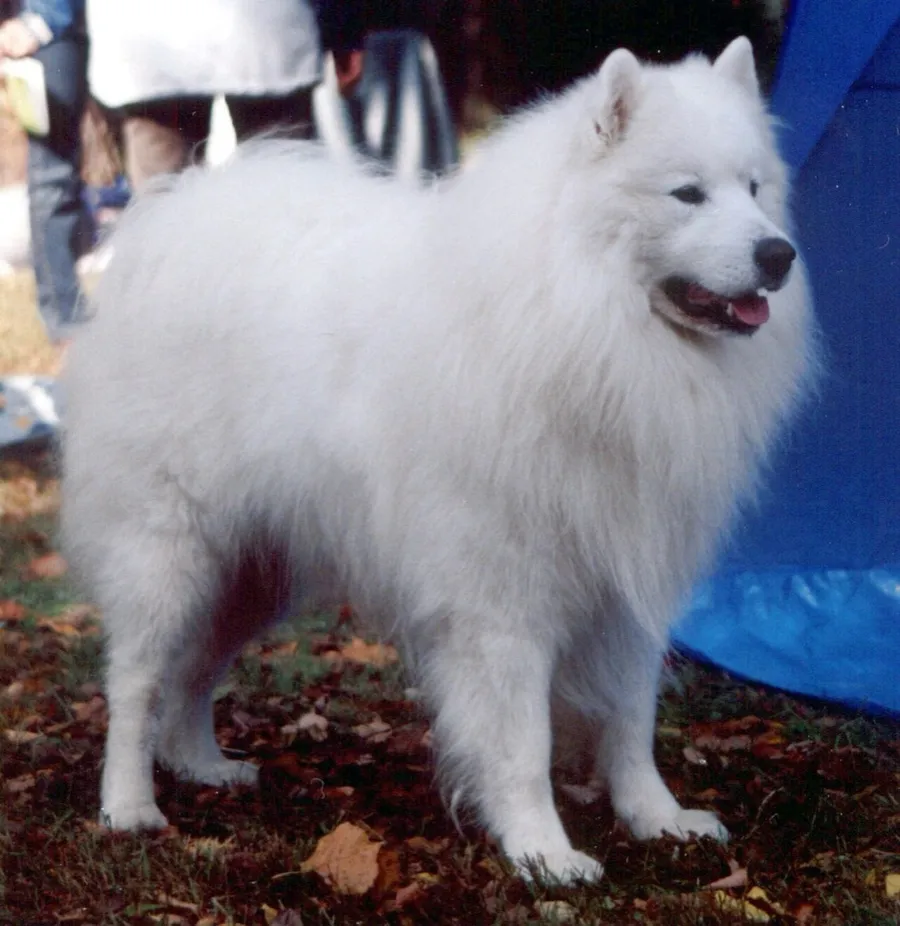
Breeds Working
Samoyed
Also known as Sammy, Bjelkier
The Samoyed is named for the Samoyedic peoples of Siberia, who used the dogs to herd reindeer, pull sleds, and keep watch, and who lived closely with them in their tents. Explorers brought the breed to England in the late 1800s, and Samoyeds took part in early polar expeditions. They are sociable, cheerful dogs that want to be part of family life.
At a glance
- Origin
- Russia (Siberia)
- Developed
- Ancient; introduced to the West in the late 1800s
- Bred for
- Herding reindeer, pulling sleds, and keeping families warm
- Height
- 19–23.5 in
- Weight
- 35–65 lb
- Life span
- 12–14 years
- Size
- Medium
- Coat
- Thick, weather-resistant double coat; white, cream, or biscuit
- Grooming
- High
- Shedding
- Heavy
- Exercise
- 1–2 hours a day of activity and play
- Recognized by
- American Kennel Club, United Kennel Club, Fédération Cynologique Internationale, Canadian Kennel Club, The Kennel Club (UK)
Good to know
Samoyeds can be vocal and may become bored or destructive without enough activity and company. The dense coat needs brushing several times a week and daily during shedding seasons.
Health considerations
- Hip dysplasia
- Samoyed hereditary glomerulopathy
- Progressive retinal atrophy
- Diabetes mellitus
Conditions breed clubs commonly screen for. Not every dog will have them. Ask your veterinarian about your own dog.
Did you know?
The upturned corners of a Samoyed's mouth create the breed's famous 'Sammy smile.'
Working group
Guardians, sled dogs, draft dogs, and rescue dogs. Often large and strong, intelligent, and capable of serious work. Early socialization and consistent training matter.
Every Samoyed is an individual.
Breed traits are tendencies, not guarantees. Your dog's genetics, early life, health, and everyday experiences all shape who they are. If you'd like help understanding the dog in front of you, let's talk.
Start a conversation