Breeds Working
Tibetan Mastiff
Also known as Do-Khyi, TM
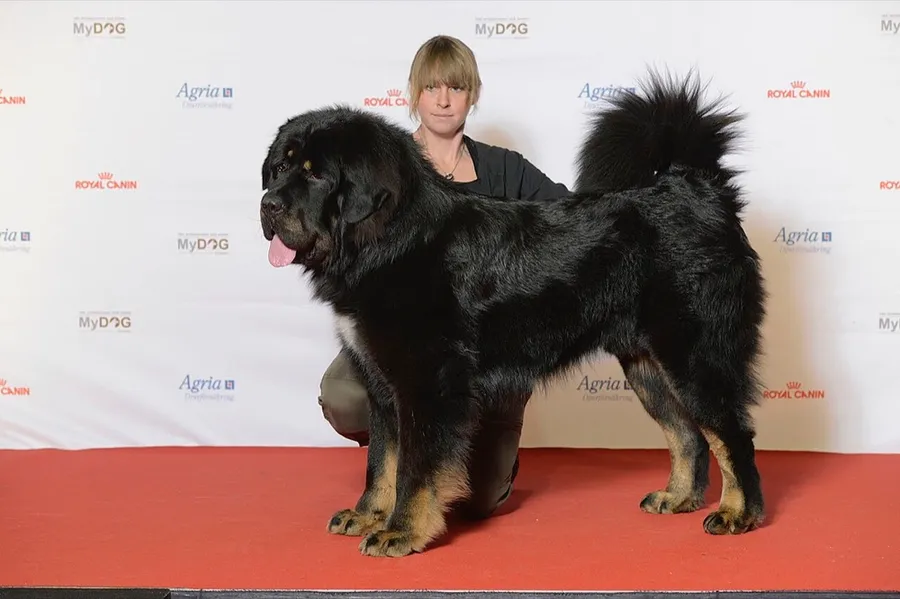
The Tibetan Mastiff is an ancient guardian breed of the Himalayan highlands, where it protected nomadic herders' camps, villages, and monasteries. Its thick coat and hardy constitution suit high-altitude cold. TMs are loyal and gentle with their families, independent, and reserved with strangers.
At a glance
- Origin
- Tibet (China)
- Developed
- Ancient
- Bred for
- Guarding villages, monasteries, flocks, and nomadic camps
- Height
- 24–26+ in
- Weight
- 70–150 lb
- Life span
- 10–12 years
- Size
- Giant
- Coat
- Thick, heavy double coat with a mane around the neck; black, brown, blue-gray, gold, or red, with or without tan markings
- Grooming
- Moderate
- Shedding
- Seasonal
- Exercise
- Moderate daily walks plus a securely fenced area
- Recognized by
- American Kennel Club, United Kennel Club, Fédération Cynologique Internationale, Canadian Kennel Club, The Kennel Club (UK)
Good to know
Tibetan Mastiffs are strong-willed and need patient, consistent training and lifelong socialization. Many are most active and vocal at night. They typically shed heavily once a year rather than continuously.
Health considerations
- Hip dysplasia
- Elbow dysplasia
- Hypothyroidism
- Entropion
Conditions breed clubs commonly screen for. Not every dog will have them. Ask your veterinarian about your own dog.
Did you know?
Tibetan Mastiffs often stay very active at night, a trait linked to their history as nighttime guardians of camps and villages.
Working group
Guardians, sled dogs, draft dogs, and rescue dogs. Often large and strong, intelligent, and capable of serious work. Early socialization and consistent training matter.
Every Tibetan Mastiff is an individual.
Breed traits are tendencies, not guarantees. Your dog's genetics, early life, health, and everyday experiences all shape who they are. If you'd like help understanding the dog in front of you, let's talk.
Start a conversation